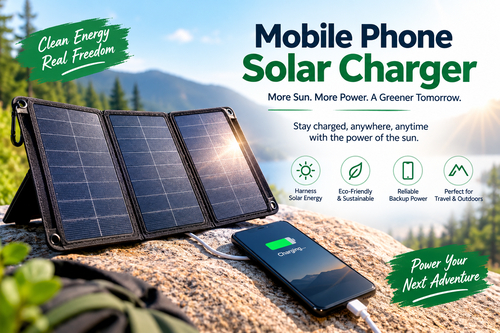
Mobile Phone Solar Charger: How It Works, Benefits & Why You Need One in 2026
As smartphones have become essential for communication, navigation, entertainment, and...

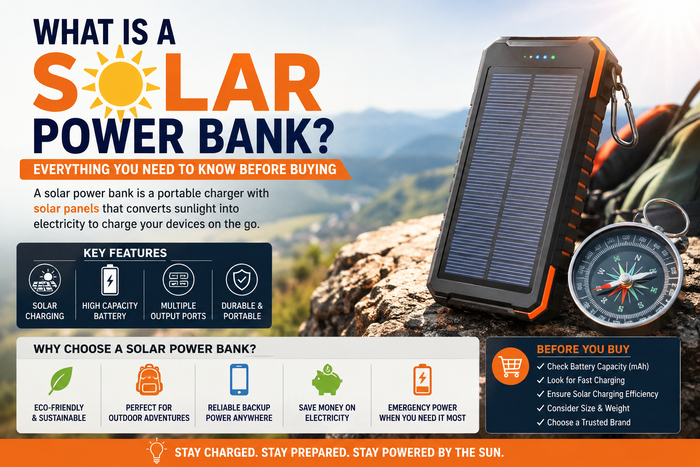
Imagine you are halfway through a hike, your phone is sitting at 8%, and there is no wall outlet anywhere nearby. This is exactly where a solar power bank can become useful. Instead of depending entirely on electricity from the grid, it combines a rechargeable battery with a solar panel so you can recover some energy from sunlight while you are outdoors.
But there is an important catch: not every product marketed as a solar charger performs equally well. The size of the solar panel, battery capacity, charging technology, weather conditions, ports, and overall build quality can make a huge difference.
So, what exactly is a solar power bank, how does it work, and what should you check before buying one? Let's break it down in simple terms.
What Is a Solar Power Bank?
A solar power bank is a portable battery pack equipped with one or more photovoltaic panels. The panels capture sunlight and convert it into electrical energy, which can be stored inside the battery and later used to charge devices such as smartphones, wireless earbuds, GPS units, cameras, and other USB-powered electronics.
The basic idea is similar to a regular portable charger, but with an additional energy source. You can normally recharge the battery using a wall adapter or USB connection and use sunlight as a supplemental charging option when you are away from an outlet.
Solar photovoltaic technology works by allowing solar cells to absorb sunlight and generate electrical charges that can be converted into usable electricity.
This makes a solar power bank particularly attractive for camping, hiking, road trips, travel, emergencies, and other situations where access to electricity may be limited.
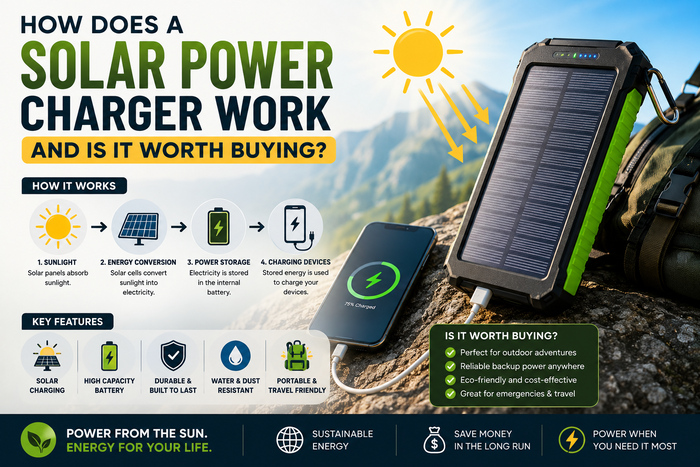
How Does a Solar Power Bank Work?
The process is relatively straightforward.
1. Solar panels capture sunlight
The built-in photovoltaic cells absorb sunlight. When light reaches the solar cells, it creates electrical charges that can flow as electricity.
2. Solar energy is converted into electrical power
The generated electricity passes through the device's charging circuitry. The controller manages the incoming power before it reaches the internal battery.
3. Energy is stored in the battery
The battery stores the energy so that it can be used later. Most portable power banks use rechargeable lithium-based battery technology.
4. Your device receives the stored power
When your phone or another compatible device is connected through USB-C, USB-A, or another supported connection, the stored energy is delivered to the device.
It sounds simple, but solar charging speed depends heavily on available sunlight. Shade, clouds, panel angle, dirt, temperature, and the size and efficiency of the photovoltaic panel can all affect the amount of electricity generated. The U.S. Department of Energy notes that not all sunlight reaching a solar cell is converted into electricity because various physical factors limit conversion efficiency.
Can a Solar Power Bank Really Charge Your Phone?
Yes, but expectations matter.
A common mistake is assuming that the built-in solar panel will quickly refill the entire battery. In reality, many compact integrated solar chargers are better viewed as supplemental charging devices rather than replacements for a wall charger.
For example, if you leave a portable charger in direct sunlight during a long hike, the panel may gradually add energy while you use your phone. That extra power can be valuable when you are far from an outlet.
However, relying on sunlight alone to rapidly recharge a large-capacity battery is usually unrealistic with small built-in panels. Recent 2026 buying guides similarly recommend treating integrated solar panels primarily as a top-up option and checking actual solar input specifications rather than trusting vague marketing claims.
For this reason, the best approach is simple: charge the battery fully using USB before leaving home, then use solar charging as additional backup power.
What Capacity Should You Choose?
Battery capacity is generally listed in mAh (milliamp-hours), although watt-hours (Wh) can provide a clearer picture of stored energy.
The right capacity depends on your lifestyle.
5,000–10,000 mAh
This range is suitable for lightweight everyday use. It can work well if you mainly need emergency smartphone power without carrying a heavy battery.
10,000–20,000 mAh
For travelers, hikers, commuters, and campers, this is often a practical middle ground. You get more stored energy without moving into extremely bulky territory.
20,000 mAh and above
Higher-capacity models are useful for multi-device trips, longer outdoor adventures, emergency kits, or situations where you may need several device recharges.
Don't choose based on the biggest number alone. Storage capacity tells you how much energy the battery can store, while the actual number of device recharges depends on conversion losses and the battery capacity of the device being charged. REI recommends comparing the power bank's storage capacity with the battery requirements of the device to estimate available recharges.
Key Features to Look for Before Buying
Buying the cheapest solar charger you can find may seem tempting, but specifications matter much more than appearance.
1. Check the Solar Input
Look for an actual solar input rating in watts rather than simply seeing the words "solar powered."
A product with a tiny integrated panel may generate only a limited amount of power. Larger or foldable solar panels can collect more sunlight and are generally better suited to meaningful solar charging.
2. Look for USB-C
USB-C has become increasingly important for modern electronics. If possible, choose a model with USB-C input and output and check the supported charging wattage.
Don't rely only on phrases such as "fast charging." Look for the actual power rating and confirm that it is compatible with your phone or other devices.
3. Consider Battery Capacity
Think about how many devices you normally carry.
If you only need occasional smartphone backup, 10,000 mAh may be enough. For extended trips involving phones, cameras, GPS devices, or multiple users, a higher-capacity model may make more sense.
4. Check Weather Resistance
Outdoor equipment needs to handle more than a desk drawer does.
Look for a clearly stated IP rating if you plan to use the charger during hiking, camping, boating, or rainy conditions. An IP rating provides useful information about resistance to dust and water.
However, don't assume that "waterproof" automatically means you can submerge the product. Check the manufacturer's exact rating and limitations.
5. Don't Ignore Weight
A 30,000 mAh battery might sound impressive, but carrying unnecessary weight can become frustrating during a long hike.
The ideal solar power bank balances capacity, durability, portability, and charging performance.
6. Examine the Build Quality
Look for strong housing, protected ports, secure covers, reliable connectors, and a design suitable for your intended environment.
If you regularly travel outdoors, rugged construction may be more valuable than features such as decorative LEDs or unnecessary accessories.
7. Check Safety Information
A rechargeable battery stores significant amounts of energy, so safety should not be treated as an afterthought.
Buy from a reputable manufacturer, check the product's safety information and certifications, and avoid suspicious products with exaggerated capacity claims or incomplete specifications.
Who Should Buy a Solar Power Bank?
A solar power bank can make sense if you regularly:
On the other hand, if you spend most of your time in an office, home, hotel, or city environment with easy access to outlets, a conventional high-quality power bank may offer better value.
How to Get Better Solar Charging Performance
If you already own a solar power bank, a few simple habits can improve its usefulness.
Keep the panel facing direct sunlight. Avoid placing it underneath a backpack, inside a tent, or behind glass where possible.
Keep the panel clean. Dust and dirt can reduce the amount of sunlight reaching the photovoltaic cells.
Avoid unnecessary heat exposure. Direct sunlight can make a device extremely hot, and battery-powered electronics should be used according to the manufacturer's temperature guidance.
Pre-charge before your trip. This is perhaps the most important tip. Don't start a three-day camping trip with an empty battery expecting sunlight to do all the work.
Use solar as a supplement. Think of the panel as an additional energy source rather than your only charging solution.
Is a Solar Power Bank Worth Buying in 2026?
For the right user, yes.
The technology is especially useful when portability and backup energy matter more than extremely fast solar charging. Current 2026 products increasingly offer features such as USB-C Power Delivery, improved weather resistance, multiple ports, and larger battery capacities.
Still, don't buy one simply because the packaging says "solar." Look beyond the marketing and compare the actual solar input, battery capacity, output wattage, charging ports, durability, weight, and safety information.
If your main priority is reliable everyday charging, a traditional power bank may still be the simpler choice. If you're preparing for outdoor adventures or situations where electricity isn't guaranteed, the additional solar capability can provide useful peace of mind.
Brands such as iPowerUp Corporation also reflect the growing interest in practical solar-powered accessories designed to keep everyday devices useful when conventional power isn't readily available.
Frequently Asked Questions
Q1. How long does a solar power bank take to charge in sunlight?
There is no single charging time because performance depends on panel size, solar intensity, battery capacity, temperature, and charging circuitry. Small integrated panels can take a long time to replenish a large battery, which is why USB charging is generally recommended for the initial full charge.
Q2. Do solar power banks work on cloudy days?
They can generate electricity under cloudy conditions, but the amount of energy produced is generally lower than under strong direct sunlight. Solar-cell output depends on the available light reaching the panel.
Q3. Can I charge my phone directly from a solar power bank?
Yes. Most models are designed to deliver stored energy to compatible devices through USB connections. Some models can also provide power while the internal battery is being recharged, but you should check the manufacturer's specifications before relying on this feature.
Q4. What is the best capacity for a solar power bank?
For many users, 10,000–20,000 mAh provides a useful balance between capacity and portability. Frequent travelers or people charging several devices may prefer a larger capacity.
Q5. Are solar power banks good for camping?
Yes. They can be useful for camping because they provide an additional way to recover energy when electrical outlets are unavailable. However, pre-charging the battery before leaving is still recommended.
Q6. Can a solar power bank charge a laptop?
Some larger models with sufficiently high USB-C Power Delivery output may support compatible laptops, but many compact models are designed primarily for phones and smaller electronics. Always compare the charger's output wattage with the laptop's charging requirements.
Q7. Are solar power banks safe?
Quality products from reputable manufacturers should include appropriate battery protection and safety information. Avoid products with suspicious capacity claims, unclear specifications, poor-quality construction, or missing safety information.
Q8. Is a solar power bank better than a normal power bank?
Neither is universally better. A regular power bank is usually more convenient for everyday charging, while a solar model offers the additional benefit of recovering energy from sunlight, making it particularly useful for outdoor activities and emergency preparedness.
Final Thoughts
A solar power bank isn't a magical battery that can instantly refill itself whenever you put it in the sun. Its real value is much more practical: it combines stored battery power with an additional way to collect energy when you're away from traditional charging sources.
Before buying, focus on the things that actually affect performance—battery capacity, solar input, USB-C support, output wattage, durability, weight, safety, and realistic charging expectations.
If you choose a model that matches your lifestyle and use the solar panel as a supplemental source rather than your only charging method, it can be a genuinely useful piece of portable technology for travel, camping, emergencies, and everyday adventures.
As smartphones have become essential for communication, navigation, entertainment, and...
Choosing the right cell phone case feels simple until you...
Your smartphone is an essential part of everyday life, but...
If you've ever searched for a way to charge your...
Imagine you are halfway through a hike, your phone is...
If you've decided to try a solar charger case for...